Supreme Court declines to limit OBC creamy-layer ruling to future cases, 6 November order
A Supreme Court bench on 6 November refused the Centre's plea to apply its March OBC creamy-layer judgment only prospectively, while ruling out reopening of concluded appointments.
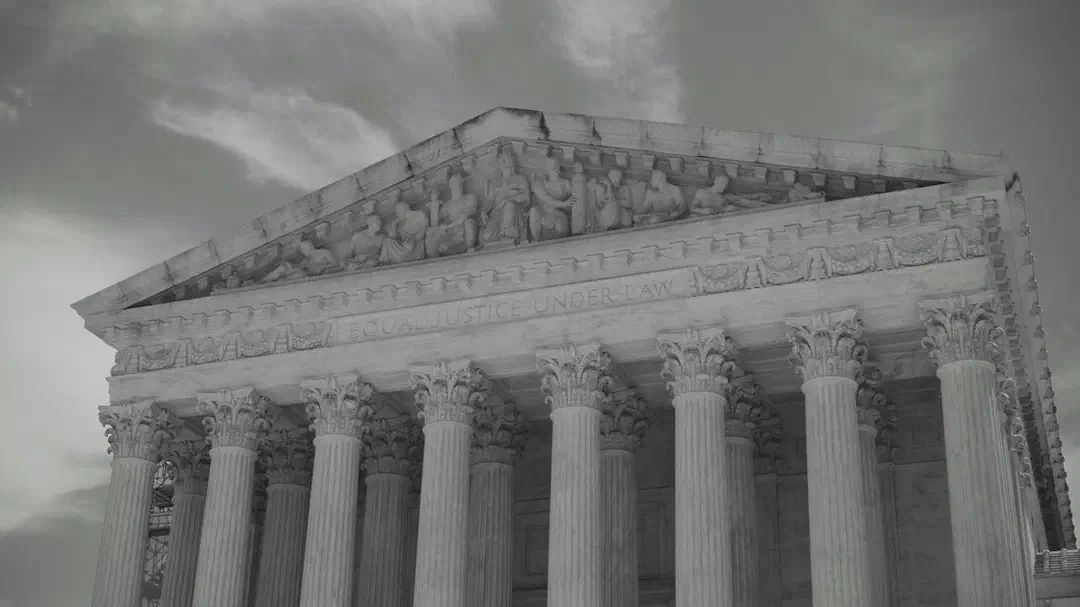
A Supreme Court bench of Justices P.S. Narasimha and R. Mahadevan on Friday, 6 November 2026, declined the Centre’s request to make the court’s 11 March 2026 judgment on OBC creamy-layer status apply only prospectively. At the same time, it said the ruling does not reopen selections or appointments already concluded, according to The Hindu, LiveLaw and ThePrint. The full judgment text was not available to this desk; the account below follows those reports and the passages of the order they quote.
Background
The March judgment upheld the assessment of OBC non-creamy-layer status under a 1993 Office Memorandum, which excludes parental salary income and agricultural income from the income and wealth test, The Hindu reports. The creamy layer is the higher-income group within the OBC category that is excluded from reservation benefits. The Centre applied to modify that judgment, seeking prospective application.
What the court said
The bench found “no convincing or reasonable justification” for deferring implementation, ThePrint reports. The Hindu reports that the result of the Civil Services Examination 2025 was declared on 6 March 2026 but services had not yet been allocated; the court said the principle as interpreted in the March judgment would therefore govern allocation of services to OBC candidates selected through that examination.
LiveLaw and ThePrint quote the order as saying the March judgment “determines the rights of the parties before this court”, and that granting the benefit “shall not, by itself, operate to the detriment of the seniority of any other person or entail the reopening of selections or appointments already concluded”. The court said claims of persons asserting similar circumstances, pending before any court, tribunal or authority, may be considered on their own merits, and The Hindu reports it expressed no opinion on them. The time for deciding such claims was extended by eight weeks; the March judgment had set six months.
The court noted the Department of Personnel and Training’s assurance, recorded in March, that it would create supernumerary posts for parties to the case who meet the non-creamy-layer criteria and other eligibility conditions. The government “may accordingly accommodate” those parties, LiveLaw quotes the order as saying.
Policy timeline
The court did not accept the Centre’s request for two years to establish equivalence of posts and consult stakeholders, and declined to set any timeline for that exercise, saying such issues fall within the domain of the Executive and the Legislature, The Hindu reports. The Centre remains at liberty to frame its reservation and creamy-layer policy in accordance with the Constitution.
What happens next
The Department of Personnel and Training has to apply the judgment to service allocation for the Civil Services Examination 2025. Pending individual claims will be decided by the forums concerned. The Centre’s response to the order was not available in the sources reviewed.
Perspectives
Listed in no particular order and given equal space. Inclusion is not endorsement.
The Centre argued
- In its application, filed through Additional Solicitor General Aishwarya Bhati, the government said retrospective implementation of the March judgment would have significant consequences for recruitment, service allocation, cadre allocation, seniority, admissions and the administration of OBC reservation, affecting lakhs of people, according to The Hindu.
- It asked for “reasonable time” of two years to establish equivalence of posts after consulting stakeholders and to formulate a uniform policy, The Hindu reports.
Counsel for the candidates said
- Advocate Shashank Ratnoo, appearing for the candidates, said the court’s intervention has put an end to a decade-long injustice, according to The Hindu.
- Senior advocate P. Wilson, also for the candidates, said the Centre had been trying to delay, even undo, a final judgment, and said the Department of Personnel and Training had not complied with court directions, parliamentary committee recommendations or its own 1993 rules, The Hindu reports.